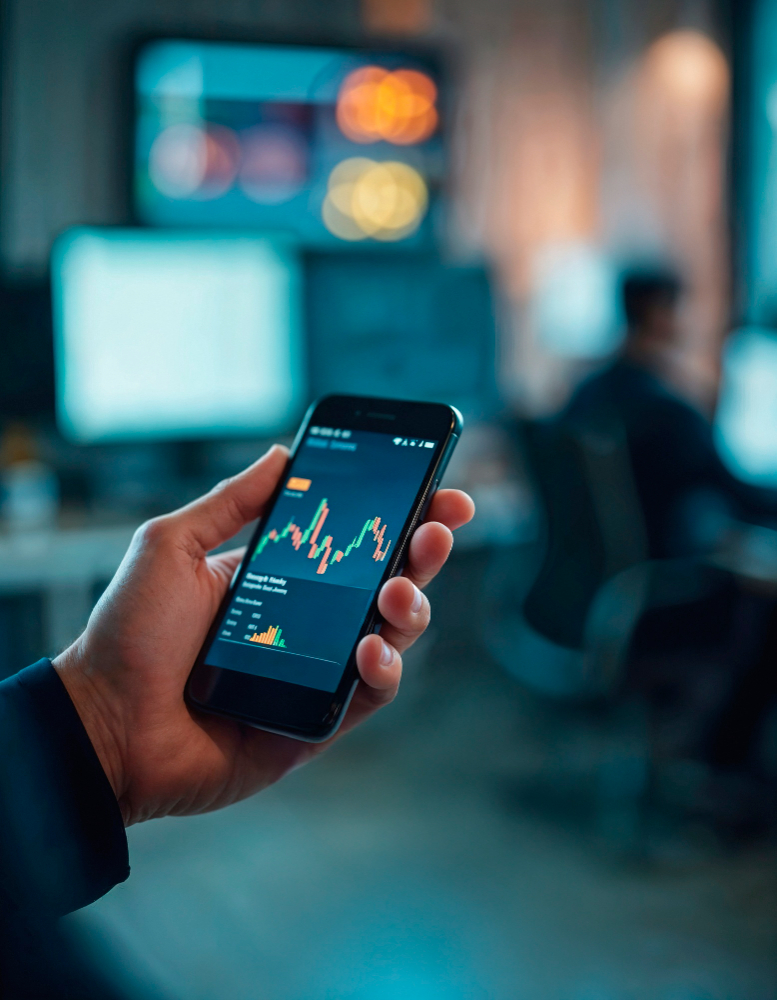

For many people over 35, managing money looks very different today than it did 10 or 20 years ago.
There are more accounts, more subscriptions, more financial apps, more investment options and far more information competing for attention every day.
At the same time, life tends to become busier.
Careers become more demanding. Families require attention. Mortgages, bills, insurance, savings and retirement planning all become part of the financial picture.
The result is a simple problem:
People have more financial decisions to make — but less time to manage them manually.
That is one reason financial automation is becoming increasingly attractive.
Instead of spending hours checking accounts, analysing information or following financial markets, people are beginning to use technology to handle more of the repetitive work.
And artificial intelligence is accelerating that change.
Financial Life Becomes More Complicated After 35
In your twenties, personal finance can be relatively simple.
Income comes in.
Rent and bills go out.
Whatever remains may go toward savings, travel or entertainment.
But as people move through their thirties, forties and fifties, the number of financial responsibilities often increases.
A typical household may need to think about:
- mortgage or rent payments;
- household expenses;
- insurance;
- children’s expenses;
- subscriptions;
- credit cards;
- savings;
- retirement planning;
- investments;
- taxes;
- emergency funds.
None of these tasks is necessarily difficult on its own.
The problem is managing all of them at the same time.
And unlike twenty years ago, people are now surrounded by financial information almost constantly.
Markets move throughout the day.
Economic news appears every few minutes.
Prices change.
Interest rates change.
Investment opportunities appear and disappear.
Trying to follow everything manually can quickly become exhausting.
Time Has Become One of the Most Valuable Financial Resources
For many adults over 35, the biggest limitation is not access to information.
It is time.
Someone with a full-time job and a family may not have two or three hours every evening to review financial news, compare market data or analyse charts.
Even people who are interested in investing may simply not want their financial life to become another full-time job.
That is where automation becomes useful.
Automation does not necessarily replace human decision-making.
Instead, it can reduce the amount of repetitive work required before a decision is made.
A system can monitor information continuously while the user focuses on work, family or other responsibilities.
This shift is already visible throughout personal finance.
Bills can be paid automatically.
Savings can be transferred automatically.
Expenses can be categorised automatically.
Subscriptions can be monitored automatically.
And increasingly, financial markets can also be analysed using automated systems.
From Manual Tracking to Automated Monitoring
Think about the traditional way people manage their finances.
A person logs into a bank account.
Then another account.
Then perhaps an investment platform.
They check balances.
They look at recent transactions.
They compare numbers with last month.
They read financial news.
They check whether anything important has changed.
This process works.
But it requires the user to remember to do it.
Automation changes the relationship.
Instead of constantly asking:
“What should I check today?”
technology can monitor information continuously and surface the things that may require attention.
That is a significant difference.
And it explains why automation can be especially attractive to people who already have busy lives.
AI Can Process More Information Than Any Individual
Another reason financial automation is growing is the sheer amount of data available today.
A person trying to understand financial markets might need to consider:
- price movements;
- economic reports;
- company results;
- interest rates;
- currency movements;
- market sentiment;
- global news;
- historical data;
- technical indicators.
No individual can monitor every piece of information continuously.
Algorithms can process much larger datasets.
An AI-based system can scan data repeatedly, search for patterns and react according to predefined rules without needing sleep, breaks or weekends.
That does not make AI perfect.
Algorithms can make mistakes.
Unexpected events can affect markets.
Historical patterns can stop working.
But AI has one obvious advantage: scale.
It can analyse far more information than a person could realistically review manually.
Automation Can Reduce Emotional Decision-Making
There is another challenge that becomes particularly important when money is involved.
Emotion.
People naturally react to uncertainty.
When markets rise quickly, there can be a temptation to act because everyone else appears to be making money.
When markets fall, fear can lead people to make decisions they would not normally make.
Financial behaviour is often influenced by:
- fear;
- excitement;
- impatience;
- overconfidence;
- FOMO;
- panic.
Algorithms do not experience any of those emotions.
An automated system follows the rules it has been given.
That does not guarantee better results.
But it can create a more consistent process.
For busy adults who do not want to react to every headline or market movement, this consistency can be one of the most interesting aspects of financial automation.
It Is Not About Becoming a Professional Trader
One of the misconceptions surrounding modern financial technology is that users need to become experts before they can use it.
For many people over 35, that is exactly what they do not want.
They already have careers.
They already have responsibilities.
They may be interested in financial markets without wanting to spend years learning every chart pattern, indicator or trading strategy.
The growth of automation reflects this change in expectations.
People increasingly expect technology to simplify complex processes.
Navigation apps eliminated the need to study maps before every journey.
Streaming services learned what people like to watch.
Banking apps made it possible to manage accounts without visiting a branch.
AI is now bringing the same idea to more areas of finance.
The objective is not necessarily to turn every user into a financial specialist.
It is to make sophisticated tools easier to access.
What Financial Automation Can — and Cannot — Do
It is important to separate automation from unrealistic expectations.
Automation can:
- process large amounts of information;
- monitor data continuously;
- identify predefined patterns;
- execute rules consistently;
- reduce repetitive manual work;
- help users save time.
But automation cannot:
- predict every market movement;
- eliminate investment risk;
- guarantee profits;
- prevent every loss;
- make uncertain markets certain.
This distinction matters.
AI is a tool.
A powerful one, perhaps — but still a tool.
Its value comes from what it can automate and analyse, not from removing the fundamental risks associated with financial markets.
Why This Matters More After 35
For someone with unlimited free time, manually analysing financial information may not feel like a problem.
For someone balancing a career, family and long-term financial goals, the calculation is different.
Imagine two approaches.
In the first, a person needs to spend hours every week monitoring information manually.
In the second, technology performs much of the monitoring automatically and the user spends their time reviewing the results and deciding what matters.
The second approach fits much more naturally into a busy lifestyle.
That is why financial automation is not simply about technology.
It is also about time management.
For many adults, the real attraction is not doing more.
It is spending less time on repetitive tasks.
The Next Step: Automated Market Technology
Budgeting and automatic savings are relatively familiar concepts.
Automated market analysis is the next area attracting attention.
Modern platforms can use algorithms to monitor markets, analyse signals and automate parts of the trading process that previously required constant manual attention.
One example is InvoxFinance.
The platform is designed around AI-assisted financial automation, using technology to monitor market information and automate elements of analysis and trading.
The concept is particularly relevant to people who are interested in financial markets but do not want to sit in front of charts throughout the day.
Instead of manually watching every movement, an automated system can perform much of that monitoring continuously.
This does not mean users should stop paying attention to their money.
And it certainly does not mean that automated investing is risk-free.
The more useful way to think about platforms such as InvoxFinance is as another step in the broader movement toward financial automation.
Before Using Any Automated Financial Platform
Anyone considering an AI-based financial service should first understand exactly what they are using.
Some useful questions include:
What does the platform automate?
How does funding work?
How can funds be withdrawn?
What fees or minimum funding requirements apply?
What risks are involved?
Is the service available in your country?
What happens when markets move in the wrong direction?
These questions are more important than marketing promises.
Automation can make financial processes more convenient, but convenience should never be confused with certainty.
Investing always involves risk.
A Different Way to Think About Money and Time
The biggest financial technology trend may not be AI itself.
It may be the gradual disappearance of manual financial routines.
People once paid every bill manually.
Now many payments happen automatically.
People once recorded every expense in notebooks.
Now software can categorise transactions instantly.
People once needed to constantly watch financial markets themselves.
Now algorithms can monitor huge amounts of market information around the clock.
For adults over 35, this change can be particularly valuable because time often becomes more scarce just as financial responsibilities become more complex.
The question is therefore shifting from:
“Can I manage all of this myself?”
to:
“Which parts actually require my attention, and which parts can technology handle for me?”
For those interested in seeing how this approach is being applied to automated market technology, InvoxFinance provides an example of how AI-driven financial automation is moving from specialist trading environments toward tools designed for everyday users.
Readers can visit InvoxFinance to review how the platform works, its requirements and its risk information before deciding whether this type of automated technology fits their needs.